Antimicrobial resistance - theory and methods
Enroll now →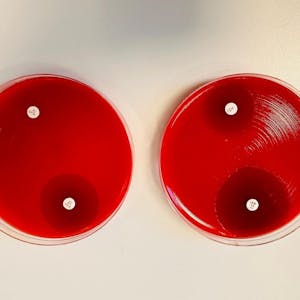
About this course
Antimicrobial resistance is an increasingly pressing global concern. This course offers unique and comprehensive insights into the challenges posed by AMR, exploring its mechanisms, implications for public health and laboratory methods as well as tools for identification. Participants gain learning experience on how bacteria become resistant and which mechanisms lead to the outcome of resistance. As part of the course, you will also receive demonstration and training in methods for antimicrobial susceptibility testing (AST) and detection of specific resistance in the microbiological laboratories. Additionally, it will take you through various techniques employed including culture-based methods such as agar dilution and disk diffusion assays which determine the susceptibility of bacteria to antibiotics. Molecular methods such as polymerase chain reaction (PCR) and whole genome sequencing are also outlined in detail equipping you with basic understanding. These methods provide valuable insights into the prevalence and mechanisms of AMR, aiding in the development of effective treatment strategies and surveillance programs. In our new version an additional module including detection of specific resistance mechanisms has been incorporated.
What you'll learn
- understand the mechanisms by which bacteria become resistant
- perform antimicrobial susceptibility testing using various methods
- recognize the public health implications of antimicrobial resistance
Course objectives
- equip participants with practical skills in laboratory methods for identifying antimicrobial resistance
- develop an understanding of the prevalence and mechanisms of antimicrobial resistance
Skills you'll gain
Related courses

Global Sodium Reduction Strategies
USD 49
Geographic Information Systems (GIS)
USD 49
How Vaccines Work
USD 49
PrEParing: PrEP for Providers and Patients
USD 49
The Emergence of Oncofertility (Past, Present & Future)
USD 49

Understanding the Healthcare Innovation Process II
USD 49
Your Body in the World: Adapting to Your Next Big Adventure
USD 69
Telehealth: Essentials, Teamwork, and Cardiopulmonary Exam
USD 49
Course details are provided by the platform and may change — always confirm on the provider's site. Links may be affiliate links.