Become Expert in Certified Quality Engineer (CQE) ASQ-CQE
Enroll now →
About this course
|| UNOFFICIAL COURSE ||This comprehensive course is designed to fully prepare you for the Certified Quality Engineer (CQE) certification and equip you with the essential skills and knowledge needed to succeed in the field of quality engineering. Whether you're a working professional aiming to advance your career, or a student entering the quality domain, this course provides everything you need to understand and apply the principles of quality engineering in real-world environments.You'll begin with an introduction to the CQE certification, the role of a quality engineer, and the structure of the Body of Knowledge (BoK). From there, the course builds a solid foundation in quality philosophies, exploring key contributors such as Deming, Juran, and Crosby, and how their principles still shape modern quality management systems today.You'll gain deep insights into quality management systems (QMS) such as ISO 9001, strategic quality planning, leadership, ethics, and effective communication within an organization. The course emphasizes both theoretical understanding and practical application, covering frameworks like Baldrige and techniques in auditing, documentation control, and quality information systems.Moving into design and development, you'll learn how to approach product and process design, conduct verification and validation, and manage risk through tools like FMEA and fault tree analysis. You'll also examine concepts of reliability, maintainability, and technical documentation such as engineering drawings.A significant portion of the course is dedicated to continuous improvement methodologies like Six Sigma, Lean, PDCA, CAPA, and Quality Function Deployment (QFD). These powerful tools and strategies will help you contribute meaningfully to process improvement and customer-focused design.You’ll also master the essential statistical techniques that are critical for quality engineers, including descriptive statistics,
What you'll learn
- understand the Body of Knowledge for CQE certification
- apply principles of quality engineering in real-world scenarios
- manage quality management systems including ISO 9001
- utilize quality improvement methodologies such as Six Sigma and Lean
- conduct risk management using tools like FMEA
Course objectives
- prepare for the Certified Quality Engineer (CQE) certification
- develop a solid foundation in quality philosophies
- gain skills in auditing and documentation control
Skills you'll gain
Related courses

Curso Green Belt - Lean Six Sigma
USD 174.99

Programa 5S [KIT DE IMPLEMENTAÇÃO PRÁTICA] + [1 CURSO EXTRA]
USD 39.99
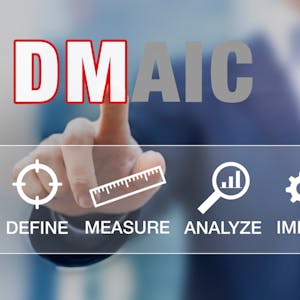
Six Sigma Advanced Define and Measure Phases
USD 49

Foundation of Global Supply Chains
USD 49

Six Sigma Green Belt
USD 49

International Supply Chains and Logistics
USD 49

Business Analytics with Excel: Intermediate to Advanced
USD 49

Mastering Word for Microsoft 365 Made Easy Training Tutorial
USD 19.99
Course details are provided by the platform and may change — always confirm on the provider's site. Links may be affiliate links.