Metro Rail Systems and Construction
Enroll now →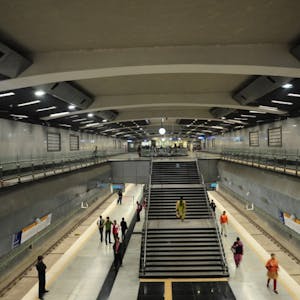
About this course
The "Metro Rail Systems and Construction" specialization comprises three interconnected courses, each lasting 10 to 12 hours. The "Planning of Metros" course offers a thorough grasp of Mass Rapid Transit Systems (MRTS), encompassing topics such as Transit-Oriented Development (TOD) and Feasibility Studies. It also covers station planning, MEP systems, Contracts, and Quality in Metros. The metro rail design course addresses elevated viaducts, substructure, foundation design, and both elevated and underground stations, with a focus on retaining systems for the latter. It provides practical insights into design concepts and foundational principles governing metro rail systems. On the construction front, the curriculum includes site investigations, construction techniques for elevated and underground metros, tunneling methods, and support systems. Participants gain theoretical knowledge and practical insights to navigate the complexities of metro rail construction effectively. Upon completion, participants will be equipped to contribute to sustainable urban development and enhance public transportation efficiency through adept planning, implementation, and management of metro systems.
What you'll learn
- understand Mass Rapid Transit Systems (MRTS)
- navigate station planning and Transit-Oriented Development (TOD)
- apply knowledge of foundation design and substructure
- implement construction techniques for elevated and underground metros
- gain insights into contracts and quality management for metro systems
Course objectives
- provide a comprehensive understanding of metro rail planning
- equip participants with design and construction techniques
- enhance skills in sustainable urban development through metro systems
Skills you'll gain
Related courses
Japanese Architecture and Structural Design
USD 79
The Finite Element Method for Problems in Physics
USD 49

Construction Management
USD 49

Estimating and Bidding in Construction
USD 49

Groundwater Exploration & Study Focus on Electrical Methods
USD 19.99

Tecnología y diseño de hormigones con system dynamics
USD 59.99
Concreting Practices
USD 49

Curso de Autocad 2D - Arquitetura, Design e Engenharias
USD 34.99
Course details are provided by the platform and may change — always confirm on the provider's site. Links may be affiliate links.