Multilevel Modeling
Enroll now →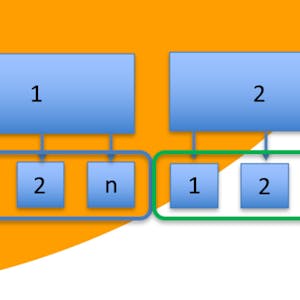
About this course
In this course, PhD candidates will get an introduction into the theory of multilevel modelling, focusing on two level multilevel models with a 'continuous' response variable. In addition, participants will learn how to run basic two-level model in R. The objective of this course is to get participants acquainted with multilevel models. These models are often used for the analysis of ‘hierarchical’ data, in which observations are nested within higher level units (e.g. repeated measures nested within individuals, or pupils nested within schools). In this type of data causes of outcomes (e.g. the performance of pupils in schools) are located both at the level of the individual (e.g., own and parental resources), and at a higher, contextual, level shared by some of the individuals (e.g. characteristics of the class and of the teacher). Because of this, the assumption of 'independent observations' is violated with hierarchical data, but multilevel modelling can easily account for that. Moreover, multilevel modelling can easily deal with missing data (in most circumstances). This course is designed and presented by Dr. Joran Jongerling on behalf of the Erasmus Graduate School of Social Sciences and the Humanities (EGSH, www.egsh.eur.nl) of the Erasmus University Rotterdam in the Netherlands. Should you have any questions about the organization or contents of the course, please send us an email at contact@egsh.eur.nl.
What you'll learn
- understand the theory of multilevel modeling
- run basic two-level multilevel models in R
- analyze hierarchical data effectively
- address issues related to nested data and missing observations
Skills you'll gain
Related courses

Data Science Foundations
USD 49

Data Analytics in the Public Sector with R
USD 49

Data Science as a Field
USD 99

Geographic Information Systems (GIS)
USD 49

Data Visualization & Analytics in Tableau
USD 49

Programming for Python Data Science: Principles to Practice
USD 49

Enhancing Reproducible Science with GitHub and Docker
USD 49

Statistical Methods and Data Analysis
USD 49
Course details are provided by the platform and may change — always confirm on the provider's site. Links may be affiliate links.