Neuroscience and Neuroimaging
Enroll now →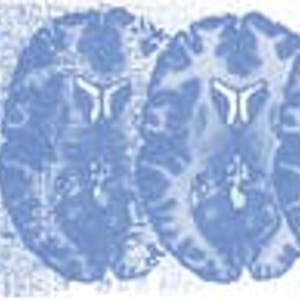
About this course
This specialization combines the strength of 4 different neuroscience courses into a cohesive learning experience. Taught by Johns Hopkins University, it begins with fundamental neuroscience concepts for neuroimaging. Neuroimaging methods are used with increasing frequency in clinical practice and basic research. Starting with the neuroanatomy of the brain, it then moves into principles of neuroimaging, including experimental design in neuroimaging, functional connectivity MRI, diffusion tensor imaging and spectroscopy imaging. The specialization then continues with two courses that focus on Functional Magnetic Resonance Imaging, one of the most widely used techniques for investigating the living, functioning human brain as people perform tasks and experience mental states, and a convergence point for multidisciplinary work. To conclude, the specialization moves into implementation of neurohacking using the R programming language, with the associated packages to perform data manipulation, processing, and analysis of neuroimaging data, using publicly available structural MRI.
What you'll learn
- understanding fundamental neuroscience concepts
- applying neuroimaging methods in research and clinical settings
- designing experiments utilizing neuroimaging techniques
- conducting data manipulation and analysis using R programming
Course objectives
- to provide a strong foundation in neuroanatomy and neuroimaging principles
- to equip students with skills in functional MRI and neuroimaging analysis
- to introduce practical implementation of neuroimaging data processing
Skills you'll gain
Related courses

Information Extraction from Free Text Data in Health
USD 49

Healthcare Data Security, Privacy, and Compliance
USD 49
Using clinical health data for better healthcare
USD 49
Advanced Deep Learning Methods for Healthcare
USD 79

Operations and Patient Safety for Healthcare IT Staff
USD 49
Deep Learning Methods for Healthcare
USD 79

Digital Dental Rehabilitations Over Implants
USD 79.99

Your Body Inside and Out: Using Exercise Physiology to Slow Aging
USD 69
Course details are provided by the platform and may change — always confirm on the provider's site. Links may be affiliate links.