[NEW] Lean Six Sigma Black Belt Certification
Enroll now →![[NEW] Lean Six Sigma Black Belt Certification](https://i.udemycdn.com/course/480x270/7216587_39c3.jpg)
About this course
Detailed Exam Domain CoverageTo pass the official Council for Six Sigma Certification (CSSC) Lean Six Sigma Black Belt exam, you must master the fundamental methodology across four specific body of knowledge areas. This practice test material directly mirrors the structure, weighting, and depth of the actual examination blueprint:Define Phase & Project Charter (25% of the exam): This domain evaluates your understanding of Voice of the Customer (VOC) analysis, project selection criteria, business case development, SIPOC diagram creation, and setting SMART goals for Six Sigma projects.Measure Phase & Data Collection (30% of the exam): This domain tests your technical proficiency in Design of Experiments (DOE) basics, Measurement System Analysis (MSA), Gage R&R studies, process capability indices ($C_p$, $C_{pk}$, $Pp$, $Ppk$), and identifying sampling plans and data types.Analyze & Improve Phase (25% of the exam): This section focuses on root cause analysis tools like Fishbone diagrams and the 5 Whys, hypothesis testing, ANOVA, Lean tools such as value stream mapping, Kaizen, 5S, and advanced optimization techniques including regression and factorial designs.Control Phase & Sustaining Gains (20% of the exam): This final domain assesses your ability to implement Statistical Process Control (SPC) charts, develop and execute comprehensive control plans, utilize process monitoring and response strategies, and manage documentation, handover, and formal project closure.Course DescriptionEarning your Lean Six Sigma Black Belt designation requires more than a superficial understanding of continuous improvement tools. The official CSSC examination presents 150 complex questions within a strict three-hour window. To secure the required 70% score, you must be able to interpret tricky data scenarios, choose the correct statistical tests, and iso
What you'll learn
- Master the Lean Six Sigma methodology
- Conduct effective VOC analysis and project selection
- Perform Measurement System Analyses and develop sampling plans
- Utilize root cause analysis techniques and Lean tools
- Implement control plans and Statistical Process Control
Course objectives
- Prepare thoroughly for the official Lean Six Sigma Black Belt exam
- Achieve a strong understanding of the exam's four key domains
- Develop the skills necessary to manage and improve processes
Skills you'll gain
Related courses

Curso Green Belt - Lean Six Sigma
USD 174.99
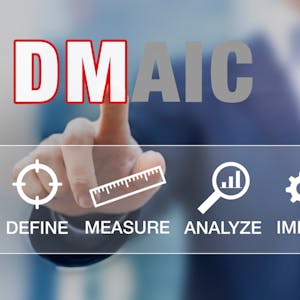
Six Sigma Advanced Define and Measure Phases
USD 49

Programa 5S [KIT DE IMPLEMENTAÇÃO PRÁTICA] + [1 CURSO EXTRA]
USD 39.99

Foundation of Global Supply Chains
USD 49

Six Sigma Green Belt
USD 49

Business Analytics with Excel: Intermediate to Advanced
USD 49

International Supply Chains and Logistics
USD 49

Mastering Word for Microsoft 365 Made Easy Training Tutorial
USD 19.99
Course details are provided by the platform and may change — always confirm on the provider's site. Links may be affiliate links.