Operations Management: Operations and the Organization
Enroll now →
About this course
The course on Operations Management and the Organization is part of the Operations Management Training Program which includes a number of eight sections also presented as individual courses for your convenience.You’ll also put ideas into practice through short case studies, realistic scenarios, and quick exercises that mirror day-to-day decisions—capacity planning, demand forecasting, process design, quality control, and continuous improvement. Templates and checklists are included so you can immediately apply tools like SIPOC diagrams, basic control charts, and throughput calculations to your own team or project.The course is designed for managers, analysts, and ambitious contributors across functions—operations, finance, HR, marketing, and IT—who need a common language for how work flows through an organization. Whether you lead a plant floor, a customer support team, or a product launch, you’ll gain a systems view of how strategy, process, people, and technology connect to deliver value reliably and at scale.The course addresses the basics of operations management in both manufacturing and service organizations. You will learn about the distinction between manufacturing and service operations and about how they may be combined in modern organizations.what operations management is and the eight functional areas it covers.about the concept of organizational strategy, the four-phase process for formulating this strategy, and how the strategy should be aligned with operations strategy in manufacturing and services contexts, andabout the transformational model for understanding operations and about four kinds of transformation that businesses engage in.This course will provide you with important foundational knowledge of operations management. This can help you better understand how achieving excellence in operations management can give your organization a competitive advantage.That’s it! Now go ahea
What you'll learn
- understand the principles of operations management
- distinguish between manufacturing and service operations
- apply tools such as SIPOC diagrams and control charts
- formulate and align organizational strategies with operations strategy
- recognize the transformational models in operations
Course objectives
- to provide foundational knowledge of operations management
- to enhance understanding of how operational excellence can provide a competitive advantage
Skills you'll gain
Related courses

Curso Green Belt - Lean Six Sigma
USD 174.99
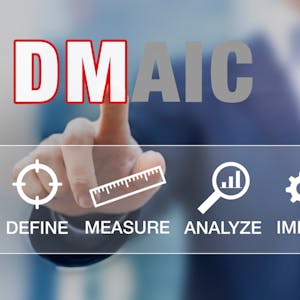
Six Sigma Advanced Define and Measure Phases
USD 49

Programa 5S [KIT DE IMPLEMENTAÇÃO PRÁTICA] + [1 CURSO EXTRA]
USD 39.99

Foundation of Global Supply Chains
USD 49

Business Analytics with Excel: Intermediate to Advanced
USD 49

Six Sigma Green Belt
USD 49

International Supply Chains and Logistics
USD 49

Mastering Word for Microsoft 365 Made Easy Training Tutorial
USD 19.99
Course details are provided by the platform and may change — always confirm on the provider's site. Links may be affiliate links.