Optimizing and Deploying Computer Vision Models
Enroll now →
About this course
Computer vision models require more than accurate architectures—they depend on well-prepared datasets, stable training processes, and reliable evaluation workflows. In this course, you'll learn how to optimize and deploy computer vision models used in real-world AI systems. You’ll start by analyzing computer vision datasets and applying image augmentation techniques to improve model performance and generalization. Next, you'll learn how to evaluate model predictions using task-specific metrics and conduct failure analysis to identify weaknesses in model behavior. The course also explores techniques for stabilizing deep learning training. You’ll examine how initialization, normalization, and regularization affect model learning dynamics and learn how to diagnose issues such as vanishing or exploding gradients. Finally, you'll learn how machine learning engineers reproduce and evaluate AI experiments using structured workflows and ablation studies. By the end of the course, you’ll be able to prepare vision datasets, diagnose training challenges, evaluate model performance, and deploy computer vision models using reliable engineering workflows.
What you'll learn
- analyze computer vision datasets
- apply image augmentation techniques
- evaluate model predictions using metrics
- conduct failure analysis
- stabilize deep learning training
- diagnose training issues
- reproduce and evaluate AI experiments
Course objectives
- understand dataset preparation for computer vision
- learn key techniques for improving model performance
- develop skills for effective model evaluation and deployment
Skills you'll gain
Related courses

파이썬(Python) 딥러닝(Deep Learning,DL) 프로젝트 - 딥러닝 모델 입문
USD 64.99
Advanced Deep Learning Methods for Healthcare
USD 79
Deep Learning Methods for Healthcare
USD 79
Natural Language Processing in TensorFlow
USD 49

Deep Learning Applications for Computer Vision
USD 49

Deep Learning for Natural Language Processing
USD 49
TensorFlow 2 for Deep Learning
USD 49
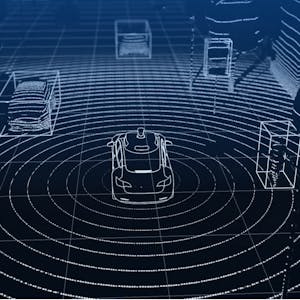
Visual Perception for Self-Driving Cars
USD 49
Course details are provided by the platform and may change — always confirm on the provider's site. Links may be affiliate links.