Pass Lean Six Sigma Yellow Belt Exam : 5 Practice Tests
Enroll now →
About this course
The Pass Lean Six Sigma Yellow Belt Exam: 5 Practice Tests (Unofficial) course is designed to help professionals, students, and quality enthusiasts gain a solid understanding of Lean Six Sigma principles while preparing effectively for the official Yellow Belt certification exam.This course includes 5 comprehensive practice tests that simulate real exam conditions and challenge you across every knowledge area—from the foundational principles of quality management to the DMAIC (Define, Measure, Analyze, Improve, Control) framework. Each question includes detailed explanations to help you understand not only the correct answer but also the reasoning behind it, ensuring deep conceptual clarity.Throughout the course, you’ll strengthen your grasp of Six Sigma tools, Lean methodologies, and process improvement techniques used across industries to enhance efficiency, reduce waste, and improve quality outcomes.Syllabus Overview:I. Introduction to Lean Six Sigma – Understand the origins, history, and evolution of quality management; explore key contributors like Deming and Juran; learn the difference between Lean and Six Sigma; and understand defect measurement, Sigma levels, and Yellow Belt responsibilities.II. Define Phase – Learn how to define projects, develop charters, identify CTQs (Critical to Quality), and capture the Voice of the Customer (VOC). Understand SIPOC diagrams and process mapping fundamentals.III. Measure Phase – Grasp the essentials of data types, collection methods, and descriptive statistics (mean, variance, standard deviation). Explore process mapping and measurement system basics to ensure data accuracy and reliability.IV. Analyze Phase – Master root cause analysis techniques such as Fishbone diagrams, 5 Whys, Pareto analysis, and graphical methods for process variation and waste identification.
What you'll learn
- Understand Lean Six Sigma principles
- Prepare for the Yellow Belt certification exam
- Utilize the DMAIC framework
- Conduct root cause analysis
- Learn process mapping and measurement techniques
Course objectives
- Enhance knowledge of quality management
- Develop skills in process improvement methodologies
- Strengthen problem-solving abilities applicable in various industries
Skills you'll gain
Related courses

Curso Green Belt - Lean Six Sigma
USD 174.99

CPMAI Exam: 570+ Updated Practice Questions for 2026
USD 19.99

Proyecto Final de Éxito Profesional
USD 49

إدارة مخاطر المشروعات والتغييرات التي تطرأ عليها
USD 69
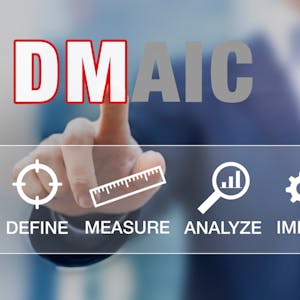
Six Sigma Advanced Define and Measure Phases
USD 49

Programa 5S [KIT DE IMPLEMENTAÇÃO PRÁTICA] + [1 CURSO EXTRA]
USD 39.99

Professional Scrum with Kanban (PSK 1) 2025 : Practice Test
USD 19.99

Manage Project Resources
USD 199.99
Course details are provided by the platform and may change — always confirm on the provider's site. Links may be affiliate links.