Software Testing Fundamentals and Methodologies
Enroll now →
About this course
In this foundational course, you will build a robust understanding of software quality assurance and the critical role testing plays within the Software Development Life Cycle (SDLC). Designed for learners with basic digital literacy, this course bridges the gap between how software is conceptualized and how it is verified for real-world reliability. You will explore the fundamental differences between Quality Assurance (QA), Quality Control (QC), and testing while learning to map these activities to different layers of web applications. You will gain hands-on experience using industry frameworks like Waterfall, V-Model, and Agile, and learn to distinguish between static and dynamic testing techniques, sequence essential STLC phases, and integrate quality checks into Scrum sprints. By course end, you will define acceptance criteria and demonstrate tests within your own Atlassian Jira workspace. Tools such as Jira Cloud (Free Tier), Microsoft Azure DevOps (free Microsoft account), and standard Office tools (Excel/Word, free web versions using Microsoft Outlook account) are used throughout.
What you'll learn
- understand the roles of QA, QC, and testing
- map testing activities to web application layers
- apply different software testing methodologies
- distinguish between static and dynamic testing techniques
- sequence the phases of the Software Testing Life Cycle (STLC)
- integrate quality checks into Scrum sprints
- define acceptance criteria in testing scenarios
Skills you'll gain
Related courses
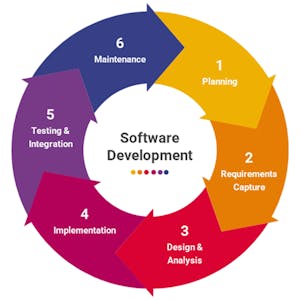
Software Engineering
USD 49

Software Testing and Automation
USD 49

python 3.x Online Arabic
USD 19.99

Working with Objects in C++
USD 49
Requirements Engineering: Secure Software Specifications
USD 49

Memory Foundations in C++
USD 49

Python Development Professional Certification
USD 24.99
Programming Languages, Part C
USD 29
Course details are provided by the platform and may change — always confirm on the provider's site. Links may be affiliate links.