Translational Science
Enroll now →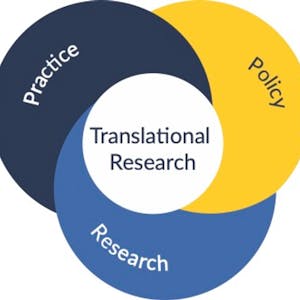
About this course
An introduction to the field of Translational Science and its applications to improve patient and community health through the four stages of translational research. Translational science is the process of turning observations in the laboratory, clinic, and community into interventions that improve the health of individuals and populations. As the translational research enterprise — both in the United States and internationally — continues to expand, there is a growing need to increase the number of people pursuing training in the fields of clinical research and translational science. This includes a continuing demand for a well-trained workforce of research investigators, clinician-scientists, and other research professionals. In this online course series, you will learn about these in-demand fields with an introduction to the four phases of translational science and how they relate to both clinical and translational research. Specifically, you’ll explore: ● What constitutes translational science research. ● The role of the federal government and industry in the support and regulation of this research. ● The need for core principles of conducting rigorous and responsible translational research. ● How to begin a career in translational research. ● Why addressing health disparities and inequities in translational research is important.
What you'll learn
- Understand the four phases of translational science.
- Recognize the roles of federal government and industry in translational research.
- Identify core principles for conducting responsible translational research.
- Explore pathways to launch a career in translational research.
- Acknowledge the significance of addressing health disparities in research.
Skills you'll gain
Related courses

Global Sodium Reduction Strategies
USD 49
Geographic Information Systems (GIS)
USD 49
How Vaccines Work
USD 49

Master of Public Health
Free
PrEParing: PrEP for Providers and Patients
USD 49

Understanding the Healthcare Innovation Process II
USD 49
COVID-19 Contact Tracing
USD 49
Your Body in the World: Adapting to Your Next Big Adventure
USD 69
Course details are provided by the platform and may change — always confirm on the provider's site. Links may be affiliate links.