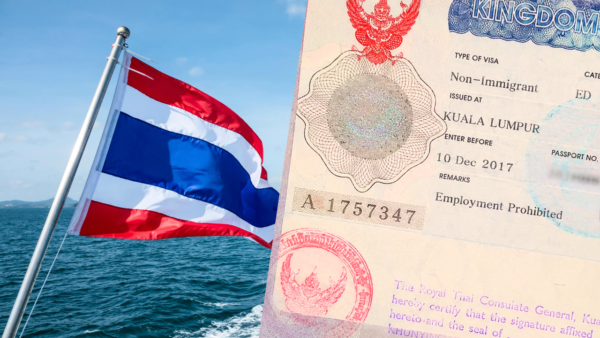
With over 30,000 international students currently enrolled in its universities, many arriving from countries like China, Myanmar, and Cambodia, Thailand has rapidly transformed into a premier study destination in Southeast Asia. The country's international education sector recently saw a 13 percent year-over-year growth, largely driven by its high affordability compared to traditional Western study hubs. Major academic institutions like Chulalongkorn University and Kasetsart University heavily drive this international student influx by offering dedicated degree programmes taught entirely in English. For ambitious students planning their academic journey, discovering fully funded graduate programmes and tuition waivers through resources like ScholarshipsAds is often the most exciting first step. However, once you have secured your academic placement and funding, navigating the local immigration process becomes your immediate top priority. A clear understanding of the regulatory landscape is essential to ensure your transition into the Thai education system is as smooth as possible.
Understanding Your Visa Options
Before you pack your bags and arrive in the country, you must secure the correct immigration status. As of January 2025, the Thai government mandated a global rollout of its e-Visa platform. This digital shift has fully modernised the process, completely eliminating the need for incoming students to submit physical paper applications at local embassies or consulates. For most international learners, the standard Non-Immigrant ED visa serves as the primary route. To further attract global talent, the government also recently introduced the Non-Immigrant ED PLUS Visa. This new category allows international students pursuing bachelor's degrees or higher to remain in the country for an additional year post-graduation to actively seek local employment, which represents a massive shift in regional immigration policy.
Of course, not all international students are seeking full university degrees. Many expatriates, professionals, and digital nomads prefer to study the local language to better integrate into the community. If you are taking this alternative route through an accredited language institute, securing a Thailand education visa will allow you to enrol in long-term Thai or Chinese language courses legally. Whether you choose a university degree or a non-degree language programme, you must remember that standard ED visa holders are strictly prohibited from working. International students must upgrade to a Non-Immigrant B visa or the new ED PLUS category to accept employment legally. It is highly recommended that you clarify your long-term goals before selecting your visa pathway, as switching categories inland can sometimes prove administratively complex.
Essential Document Checklist
Gathering the correct paperwork is undoubtedly the most critical phase of your application. While the Ministry of Higher Education, Science, Research and Innovation (MHESI) acts as the primary government body overseeing university enrolments, the actual visa issuance relies on stringent financial and academic proofs. According to the official Ministry of Foreign Affairs e-Visa portal, applicants for both short language courses and degree programmes must provide verifiable financial evidence, such as three months of bank statements covering tuition and living expenses, alongside a formal enrolment confirmation letter from a recognised educational institute. All documents uploaded to the digital system must be crystal clear, and any paperwork issued outside of Thailand must typically be translated into English or Thai and properly notarised.
To ensure a smooth application via the new online system, carefully prepare the following documents in high-quality digital formats:
- A valid passport with at least six months of remaining validity and adequate blank pages.
- A recent digital passport-sized photograph taken against a plain background.
- An official acceptance or enrolment letter directly from your chosen Thai university or language school.
- Proof of sufficient financial means, typically showing a consistent balance over the last three consecutive months.
- A certified copy of your academic records or previous qualifications if applying for a formal university degree programme.
- Comprehensive health and travel insurance that covers the entire duration of your initial stay.
Managing Costs and Local Immigration Rules
Studying in Southeast Asia is highly cost-effective, but you must carefully budget for both daily life and ongoing visa maintenance. International students typically require a monthly living budget of between 15,000 and 25,000 THB to comfortably cover private accommodation, local street food, and public transportation in major hubs like Bangkok or Chiang Mai. Upon your arrival, the airport entry process is noticeably smoother than in previous years. Thailand has successfully phased out the traditional paper TM6 immigration form in favour of the Thailand Digital Arrival Card (TDAC), saving incoming students valuable time at border control. Keeping a digital backup of this arrival record is highly advised, as you will need it for future administrative tasks.
Once you are settled in your new home, you must strictly adhere to local immigration laws to maintain your legal student status. Extending a Non-Immigrant ED visa locally at a Thai Immigration Office carries a standard administrative fee of 1,900 THB per extension. Furthermore, the Office of the Immigration Bureau is the mandatory government authority where all foreign students must file their residential address reports every 90 days. Failing to report your residential address every 90 days results in a mandatory 2,000 THB fine for international students, which can quickly add up and cause complications for future renewals. Staying highly organised with these basic administrative tasks will ensure your study abroad experience remains stress-free, allowing you to focus entirely on your educational and professional goals.