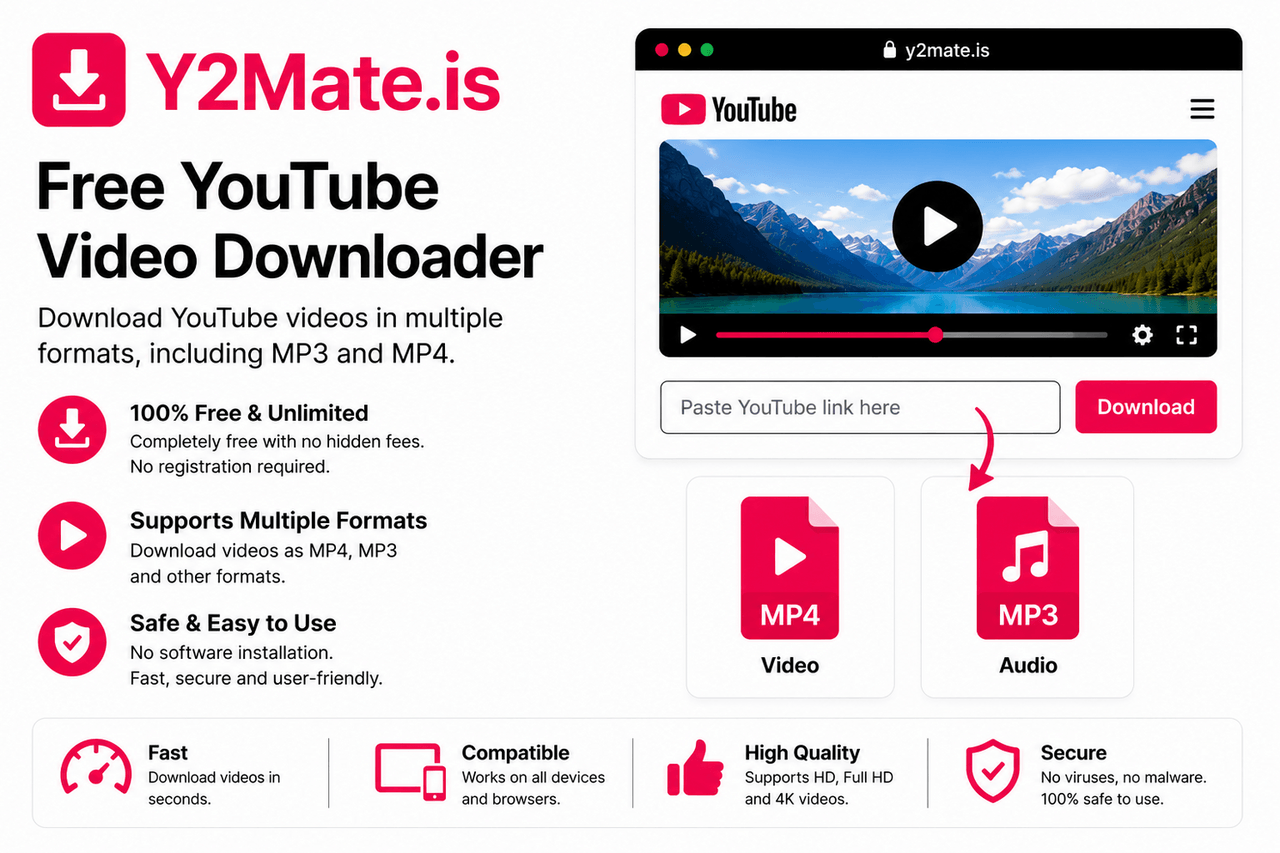
Online video content has become an essential part of daily life. Millions of people watch tutorials, educational content, music videos, documentaries, and entertainment videos every day. However, internet connectivity is not always available, and streaming videos repeatedly can consume a significant amount of data. This is why many users look for reliable solutions such as Y2Mate, a free YouTube video downloader that allows users to save videos in multiple formats, including MP3 and MP4, for convenient offline access.
Why Offline Video Access Matters
There are many situations where offline video access is useful. Travelers often face limited internet connectivity during flights or long journeys. Students may want to save educational videos for study purposes without worrying about internet interruptions. Music lovers frequently download audio versions of their favorite songs to enjoy them anytime.
Offline access provides flexibility and convenience while reducing data consumption. Instead of streaming the same video repeatedly, users can download it once and watch it whenever they want.
Benefits of Using a Video Downloader
Video downloaders offer several advantages:
1. Save Internet Data
Streaming high-definition videos consumes substantial bandwidth. Downloading content once can significantly reduce ongoing data usage.
2. Watch Anywhere
Downloaded videos can be viewed without an internet connection, making them ideal for travel, commuting, or remote locations.
3. Multiple Format Options
Many users have different needs. Some prefer video files in MP4 format, while others only need audio files in MP3 format. Having multiple format options increases flexibility.
4. Faster Access
Opening a downloaded file is often quicker than waiting for a video to load online, especially on slower internet connections.
Popular Uses for Downloaded Videos
People download videos for many reasons, including:
Educational tutorials
Language learning lessons
Fitness and workout guides
Business and marketing training
Podcasts and interviews
Music playlists
Documentary content
Having these resources available offline allows users to learn and stay productive even when internet access is unavailable.
Choosing the Right Format
Before downloading content, it is important to choose the appropriate format.
MP4 for Video
MP4 is one of the most widely supported video formats. It works on smartphones, tablets, laptops, smart TVs, and many other devices.
MP3 for Audio
MP3 is ideal when users only need the audio portion of a video. It is commonly used for music, podcasts, lectures, and interviews.
Selecting the right format helps save storage space and improves the overall user experience.
Tips for Managing Downloaded Content
To keep downloaded files organized:
Create separate folders for music, education, and entertainment.
Use clear file names for easy searching.
Remove outdated files regularly to free storage space.
Back up important educational or professional content.
Good file management makes it easier to locate content when needed.
The Growing Demand for Offline Media
As digital content continues to expand, more users are seeking ways to access videos and audio offline. Whether for education, entertainment, travel, or productivity, downloadable content offers greater flexibility and convenience. Modern downloading tools make it easier than ever to save videos in formats that suit individual preferences and device requirements.
Conclusion
Offline video access has become increasingly valuable in today's digital world. The ability to download content in formats such as MP4 and MP3 allows users to enjoy videos and audio whenever and wherever they choose. By using reliable downloading tools and organizing files effectively, users can create a personal library of content that remains accessible even without an internet connection.