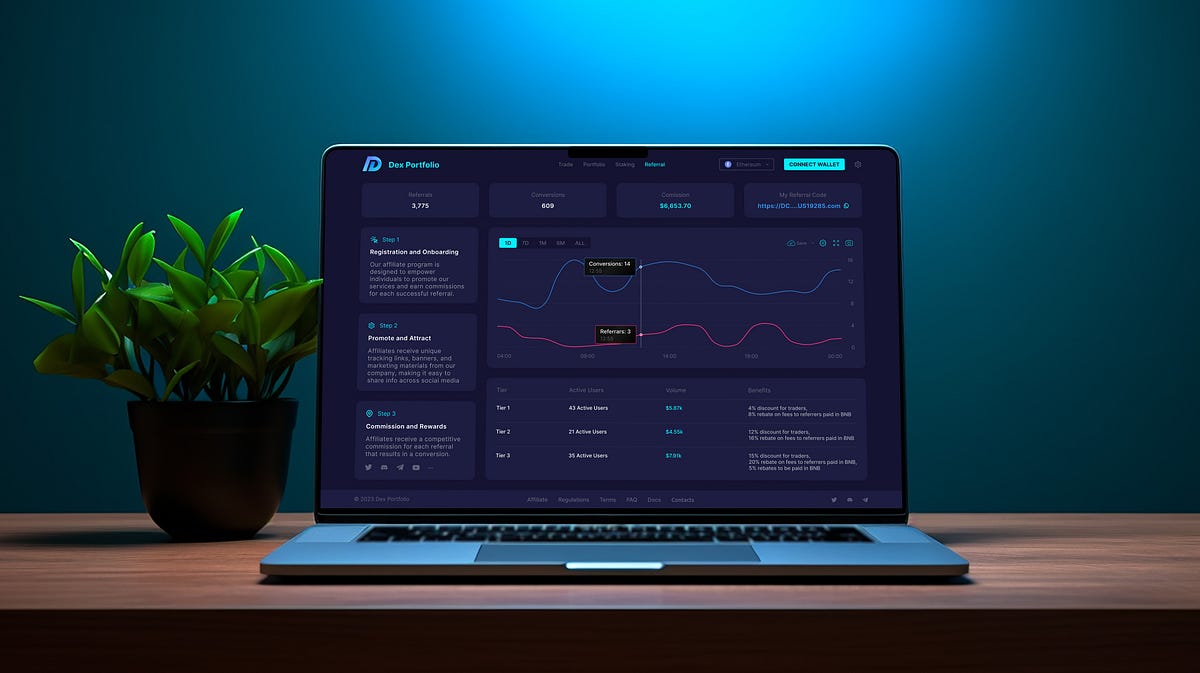
Let’s talk about the daily grind of affiliate management. You wake up, coffee in hand, and immediately open ten tabs. Tracker, CRM, analytics tool, ad platform, Telegram, spreadsheets, screenshots – it’s a mess. And somewhere in the chaos, you’re supposed to find clarity.
Fragmentation is the silent killer of performance. Every disconnected tool adds a little friction. You waste seconds switching, minutes checking numbers, and hours verifying data. It doesn’t feel like much in the moment, but multiply that across weeks and campaigns, and it’s egregious. That’s your profit margin bleeding through inefficiency.
Affiliate marketing used to be simpler. One tracker, one offer, one traffic source. Now, every media buyer juggles a full tech stack – trackers, CRMs, automation tools, traffic management systems, and analytics dashboards. Each one promises to “simplify your life,” yet each adds another layer of complexity.
Here’s the real cost: context switching kills focus. When you jump between tools, your brain resets every time. You lose mental flow, forget what metric you were analyzing, and spend time recalibrating. It’s like sprinting, then tripping over your own feet over and over again.
The second cost is data inconsistency. Numbers don’t match. Your tracker shows 1,200 conversions. Your CRM says 1,050. Google Analytics displays 980. You spend hours asking, “Which one’s right?” but the truth is that none of them are completely right.
And when data is unreliable, every decision is built on shaky ground. You hesitate to scale, afraid you’ll amplify the wrong metric. You delay optimizations, double-checking what should be automated.
This is the hidden tax of tool fragmentation: it slows you down, blurs your visibility, and chips away at your edge.
Why integration matters – data accuracy, workflow speed, and visibility
Now imagine the opposite. One system pulls all your data in real time. No exports, no manual checks, no guesswork. You see the full funnel – clicks, conversions, retention, and ROI without touching another tab.
That’s integration. It’s the glue that holds a modern affiliate operation together.
When systems communicate, accuracy skyrockets. You stop playing detective with your own numbers. Every click and conversion follows a single thread across your stack. You can trace performance without juggling between ten interfaces.
Workflow speed transforms, too. No more downloading CSVs or updating Google Sheets. No more “Can you send me the latest stats?” in your Slack channel. The system becomes your assistant, syncing data automatically.
Visibility is the biggest game-changer. You get a panoramic view of your performance. Want to see which campaign is leaking profit or which geo underdelivers? One look, and you know. The entire picture lives in a single interface.
This isn’t theory, it’s the foundation for scaling. Integration eliminates redundant work and allows every team member to operate faster. It’s not about fancy dashboards. It’s about giving marketers their time back.
How Hyperone’s API connects with trackers, CRMs, and analytics tools
So, how does Hyperone approach this problem? By building an ecosystem instead of another isolated tool.
Its open API acts as a universal connector, bridging the gap between trackers, CRMs, and analytics systems. Whether you’re running Voluum, Binom, or RedTrack, it plugs right in. You can connect your HubSpot or Pipedrive CRM and even pull insights directly from Google Analytics, Power BI, or Looker Studio.
This matters because most affiliate workflows die in the “in-between.” You’ve got data sitting in multiple places, but no single system that unifies it. Hyperone fixes that by turning your existing tools into one synchronized engine.
Data moves seamlessly. Every time a lead registers, every conversion updates, and every payout syncs across your platforms automatically.
You don’t have to manually upload lists or cross-check IDs. The system handles it for you.
Even better, Hyperone’s integrations aren’t passive. They don’t just mirror data – they react to it. You can set rules like, “If EPC drops below €0.20, pause this traffic source,” or “If ROI hits 50%, increase the cap.” That’s the power of automated affiliate marketing software.
And that’s the difference between a stack of tools and an integrated system. One keeps you busy. The other keeps you winning.
Benefits – seamless campaign setup and unified dashboards
Setting up campaigns used to feel like assembling furniture from a foreign manual – too many parts, missing screws, and frustration guaranteed.
Now, integration makes it effortless.
Here’s what changes once everything connects:
- You set up once, deploy everywhere. Configure a campaign in Hyperone and sync it with every tracker or CRM instantly. No duplicate work. No broken links.
- You analyze from one place. Instead of juggling 12 dashboards, you open one. You see every click, conversion, and payout in context.
And that’s when the magic happens. You stop fighting your tools and start using them as extensions of your mind.
You can filter by GEO, offer, or source in real time, see fraud detection data inline, and instantly know where to allocate spend.
Integration turns marketing from firefighting into orchestration.
Real-world effect – media buyers reducing ops time by 60%
There’s theory, and then there’s what happens when the thing actually hits the ground.
When Hyperone integrated a mid-sized media buying team’s tech stack – tracker, CRM, analytics, and traffic sources – they reported a 60% drop in operational time. That’s not hype. That’s a tangible shift from “fixing stuff” to “growing stuff.”
Here’s what that looks like in practice:
- No more 2 a.m. CSV exports to reconcile conversions.
- No more guessing why one campaign’s ROI tanked overnight – it’s all logged, visible, and traceable.
- No more “Hey, did anyone pause GEO 3?” moments. The system did it automatically when fraud rose past the threshold.
When you automate the grind, creativity explodes.
Those same media buyers started testing 3x more landing pages, doubled their creative output, and spent more time negotiating higher payouts instead of solving postback issues.
The result wasn’t only more profit – it was better morale. Their team finally had the breathing room to focus on what actually drives growth.
This is the underappreciated side of integration: it saves mental bandwidth. When you remove clutter, focus sharpens. When focus sharpens, performance compounds.
Why disconnected tools hurt scaling
More traffic, more campaigns, more people. And when each one relies on a separate system, you get a spaghetti mess of dependencies.
Scaling under those conditions is like building a skyscraper on sand. Every new integration creates new failure points.
Disconnected systems multiply human error. Forget to update one field in a tracker? Suddenly, your CRM has the wrong lead source. Didn’t sync time zones? Your conversions appear to happen in the future.
These aren’t “tiny” mistakes. They skew data, destroy trust, and cost you real cash.
And even if you catch them, fixing them still costs hours. Hours that could’ve gone into testing creatives, optimizing funnels, or closing advertiser deals.
An integrated system locks those cracks before they appear.
You can literally calculate how many campaigns a manager can handle before efficiency drops. You can simulate performance based on live data. That’s how you scale intelligently.
Closing thought – integration as a growth advantage
The affiliate marketing world moves at an insane pace. Traffic prices shift by the hour. Platforms change policies overnight. Competitors copy your funnels before lunch.
In that kind of environment, speed is everything. Integration gives you speed, not the reckless kind, but the strategic kind. It removes friction, compresses decision time, and lets your system think faster than you can.
The control to see everything that matters without the noise. The control to automate what slows you down. The control to scale with precision instead of chaos.
Because growth doesn’t come from working harder. It comes from working cleaner. In a fragmented world, integration isthe competitive advantage. You can’t outspend everyone forever, but you can out-optimize them.